Myrtle Beach Real Estate Blog

Stay current and up to date on Myrtle Beach Real Estate.  We post topics regarding Community and Area information, Ace Realty's BlogNew Construction and Homes and Condos For Sale.  Additionally, we'll offer Buyer & Seller advice and tips. Finally, what's hot when it comes to Myrtle Beach Attractions and Events.

Ace Realty will be happy to assist you, whether buying, selling or just curious for now.  Let our over 100 years of combined experience go to work for you! 

Looking to prepare your home for sale or want to upgrade your new home?  Find what you're looking for! Home Improvement

Dec. 26, 2016

Interesting Facts About Myrtle Beach Golf Courses!

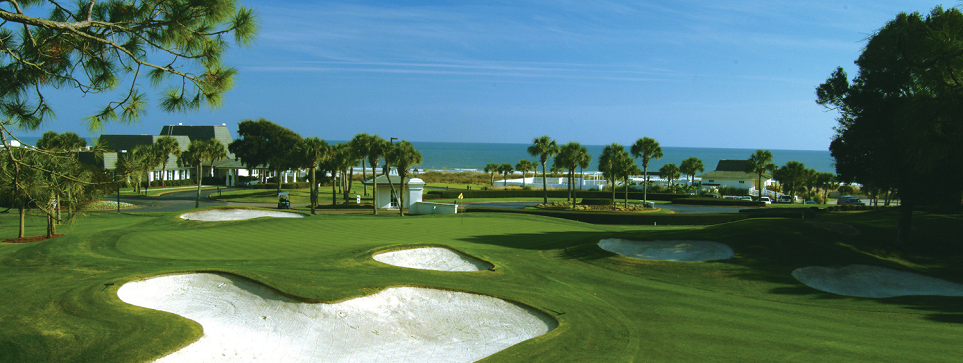
The Dunes Club Myrtle Beach

Palm Trees, Greens and lovely people. South Carolina: #1 in Golf

Each year thousands of people travel from all over the country to golf on the lovely greens of Myrtle Beach, South Carolina. “The Grand Strand” has been named ‘The Seaside Golf Capitol of the World’ with over 100 Championship courses along the small stretch of the East Coast.

What golfers don’t realize is… Each of these greens have a story of their own. Here are some extremely interesting facts about even the most popular of Myrtle Beach Golf Courses:

1) Wicked Stick: If you hit a ball into someones yard, the clubhouse will reimburse the balls lost; and they also offer coffee and tee all the time.

2) Oyster Bay: the only out of bounds on this green is the road on #18. On #17 (an island green) the oyster shells around the green are considered part of the water hazard.

3) Thistle: This is the only course in Myrtle Beach with 12 minute tee times. Most often tee times are seven, eight or nine minutes. Thistle will be opening one of the largest and most technologically sound clubhouse very soon. They also the average the largest greens at about 7,300 square feet.

4) World Tour: The largest green in Myrtle Beach. It is #9 on the Open 9 and a little over 18,000 square feet.

5) Grand Dunes: This is the longest course in Myrtle Beach, from the tips it reached  seven thousand six hundred eighteen yards. Thats longer than the U.S. Open!!

6) Blackmoor: This course has a graveyard on #13 which rests a plantation family and their slaves!

7) Farmstead: This Golf Course is located right on the North Carolina / South Carolina border. 22% of the coarse is in South Carolina and the other 78% is in North Carolina; Therefore when you tee off on #10 you tee from NC into SC. Wouldn’t it be nice if you could hit it into Georgia?!  ????

8) Heritage: This course has 2 graveyards. One is on #8 and rest slaves and on #4 is rested the bodies of settlers who once owned the land.

9) Bald Head Island (North Carolina): This course actually allows no cars (golf carts only). Although this is an island there are deer and other wildlife such as alligators inhabited here. How did they get on an island? During low tide wildlife can move easily from island to island.. this is the only explanation we have. The MOST Amazing fact about Bald Head is how it got it’s name. Bald Head Island got its name from the days of Blackbeard(Yes, the pirate!) You see, when low tide would come around, ships would consistently run aground. Blackbeard knew this happened often and the ships were there for the taking, word spread to “Beware of the Bald Head” as Blackbeard’s men would scalp stranded sailors when the raided the grounded ship; Hence the name, Bald Head Island.

10) Barefoot Resort and Golf: This as well as its sister greens called the “Dye Course” are my personal favorites. This course offers the most reasonable golfing price around for the amenities and service available in Myrtle Beach. Barefoot hosts the annual Hootie and the Blowfish Festival each year after Monday after the Masters. In addition to these amazing accomplishments, Barefoot was recently chosen for the location of filming “The Big Break”.

WOW! That’s a lot of interesting information. Who knew Golf Courses have such stories to tell?

Golfing is a passion for many and when the Sun goes down.. these greens turn into a miraculous sight of pure unwavering beautyGolfing is a passion for many and when the Sun goes down…   these greens turn into a miraculous sight of pure unwavering  beauty!

Myrtle Beach Golf Course Communities & Homes

South Carolina: #1 in Golf
“Smiling Faces and Beautiful Places”

Dec. 26, 2016

The Home Buying Process - A Step By Step Guide

The Home Buying Process

The Process of Buying a Home

  • A step by step guide through the transaction process for both experienced and first time home buyers.

Buying a home is one of the largest investments most people will make in a lifetime, and we as Realtors are here to assist you through the process with dedication and your best interest at heart. Even if you have previously purchased a home, many laws and regulations have been changed within the Real Estate Industry in recent years. Many people choose to rent instead of purchase simply due to the fear of the home buying process; However, as experienced and educated Realtors it is our personal duty and honor to walk with you step by step through the following process while working on your behalf to make your transaction as smooth as possible:

  1. Contact Us! -Once you have reached out to a Realtor, we have the ability to give you access to many properties listed in the MLS and you will be allowed to save any homes you are interested in. (Upon deciding to purchase you may wish to decide how you chose how to fund the sale. If you wish to finance, speak with your loan officer about obtaining a “Pre Qualification Letter” or ask your Realtor for suggested Lenders and discuss financing options such as VA and FHA loans for eligible properties.)
  2. Look, Look, Look! -Narrow the searches you and your Realtor have gathered to the properties that meet your criteria and your Realtor can schedule showing appointments for you to look at them yourself.
  3. Make an Offer! -If you have found a home that you wish to purchase your Realtor will write and offer to Purchase. At this point there may be negotiations between your Realtor and the Seller’s but once an agreement has been made and all parties have signed you are officially under contract! An “Earnest Money” deposit will be collected and held through closing at which time the funds will be credited towards the purchase price.
  4. Choose an Attorney -In South Carolina both parties are represented separately throughout the transaction to closing. During the process the title to the home will be researched and cleared for your purchase. The attorney will work closely with both your Realtor and Loan Officer (If you choose to finance) If you do not have an attorney, your Realtor may give you a list of Law Offices in your area; Once you have chosen the Realtor will send the ratified contract in to be processed.
  5. Order a Home Inspection! -Although this is not a requirement, it is always advised that Buyers order a Home Inspection within the time allowed per your contract in order to protect themselves. This inspection report will state any faults with the home. South Carolina Law states that any Structural, Plumbing or Electrical defects may allow the Buyer to withdraw from the sale without penalty in the event that said items are deemed unsatisfactory and the Seller neglects to correct said items or agree on a monetary compensation for the required repairs.
  6. Review the Wood Infestation Report (Commonly referred to as a CL100) -This inspection is most often provided by the Seller unless otherwise stated in the purchase agreement. The report will state any concerning moisture levels, wood rot, Active or previously treated termites or any other wood destroying organisms. The CL100 will most likely be ordered by the Closing Attorney within 2 weeks of closing as the report is only valid for 30 days. Any issues stated which would hinder the sale of the property must be treated and/or repaired prior to closing.
  7. Schedule Your Final Walk Through! -All Buyers are given the right to a final walk through inspection with their Realtor prior to closing.
  8. Close! -After all necessary steps have been completed and any loan documents are prepared, your Attorney will schedule a Closing time to review and sign all financial and binding documents. When both parties have signed closing documents the Attorney will record the deed into your name as the Buyer, at which time you are officially a Home Owner!

Ace Realty looks forward to assisting you and is dedicated to providing quality, client level service.  Thank you for visiting our website: www.AceRealtySC.com

Dec. 26, 2016

Tips for Preparing your Home’s Entrance

Home Entrances - Myrtle Beach, Preparing an Entrance

The exterior of a home is what a buyer sees first, so we often hear the term “curb appeal”.  After all, a first impression goes a long way.  So what’s next?

Entrance.  Once a buyer is enticed by the appearance of your home, their next step is to “take the grand tour”.  So what the potential buyer views when first entering is extremely important.  Here’s what Barbara Ballinger, a writer for the National Association of REALTORS had to say on this topic:

“Despite the increased prominence of back doors, mudrooms, and other alternative entryways, most visitors still enter a home through its front door.  Here’s how you can help buyers and sellers set the stage for a gracious point of arrival.

With pressure to justify every square foot of real estate and conserve energy, the larger-than-life front hall is undergoing a metamorphosis.  It’s not disappearing, though—rather, it’s doing its job of welcoming in a more compact, efficient way.

Design experts may use different terms to describe the space beyond a front door—vestibule, hallway, entryway, foyer.  The terms are quite interchangeable with slight variations. A vestibule is generally a small, separate air-lock that stops cold and hot air from entering the rest of the house.  A hallway provides entry but also links spaces and rooms—at the front or anywhere in the home, says design guru Marianne Cusato, author of The Just Right Home (Workman Publishing).  Of course there are dozens of other words you can use to describe this space.  And whether you pronounce the foyer as foy-yay with a French spin or foy-er (rhymes with lawyer) really depends on how grand you or your home owners want the space to sound.

Whatever you call it, it’s important to understand the potential impact the entrance to a home can have on a visitor’s first impressions, says Stephanie Mallios, e-PRO, salesperson with Towne Realty in Short Hill, N.J. “If there are too many shoes and coats strewn about and no place to put keys or gloves, many buyers will have a tough time imagining how they’ll live there,” she says.

Study these eight design details to help your clients create a welcoming space that does its job well, both aesthetically and functionally—no matter what it’s called.

Size, Scale, Sequence.  Due to energy-efficiency concerns,an entry with a soaring ceiling and sweeping staircase is far less popular than it once was.  Still, a modest entryway as small as 4 feet to 5 View straight through from Foyerfeet wide can convey a proper sense of arrival, says Cusato.  More important than size is the scale (the space should be in proportion with the rest of the house) and the sequence (the rest of the home should flow out in a logical way), says architect Duo Dickinson, author of Staying Put (Taunton Press).  Upon entering, people should be able to see other spaces and rooms and know where to go next, says architect Julie Hacker of Cohen-Hacker Architects in Evanston, Ill.  In the best layouts, there may even be a view straight through to a backyard.
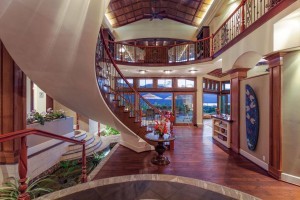
Height. The number of levels or floors in the structure often determines this factor, though even two- and three-story homes are moving away from entries with soaring ceilings.  The location of a stairway will hinge in part on square footage and what role an architect or builder wants the stairs to play.  In smaller homes, it’s often part of the foyer but off to the side, and goes straight up—being purely functional.  In larger homes, the staircase might occupy its own separate hall and curve gracefully to a landing, past a window or window bank, and up to the next level.  To carpet or not is a personal preference, though bare treads can be noisy; a good compromise is a runner covering painted or hardwood treads.

Millwork. To fashion a gracious entry, most design pros recommend a door that is at least three feetEntrance Of Home wide and 72 inches tall.  The trend of pricey double doors is disappearing, according to Chicago-area builder Orren Pickell.  Whether a door includes a glazed transom or sidelights should depend on how home owners feel about privacy and bringing natural light into the interior.  The size of the glazing should be proportional to the door’s width and height.  For baseboard and crown molding, simplification is the overriding trend, which keeps fussiness and costs down, except for the most traditional houses, says Cusato.  Wainscoting is another way to add visual detail. Columns are helpful to screen off adjoining rooms without completely walling them off.  Hacker uses two columns with space for books cut out on the back side of each on the living room side to separate areas in her home.
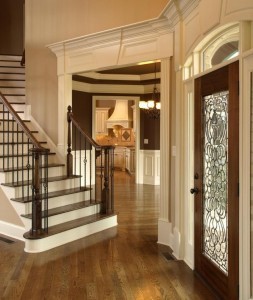
Lighting.  Good lighting is essential for safety, but it also sets a welcoming mood.  A chandelier or large pendant is the obvious choice, while ceiling cans or sconces also work well.  Whatever fixture home owners prefer, advise them to install dimmers.  Not only will this allow them to save energy, but options for differing lighting intensity and color can also help set a dramatic mood for a party, a bright feel for an open house, and a low-light one for romance.

Flooring.  A visually rich, substantial looking floor will reward visitors, says Dickinson. But due to the wear and tear common for front entryways, it should also be practical. Slate, stone, and porcelain meet that criteria, though they can be cold on bare feet in winter.   Avoid soft woods that may dent and scratch; don’t use carpeting since it will become too dirty with traffic; and avoid vinyl unless it’s one of the more expensive, newer-looking versions.  Home owners may wish to set off the area in a different material than adjacent rooms and hallways.  But choosing one common material for several rooms produces a feeling of continuous flow and makes smaller rooms appear larger.

Furnishings.  Depending on the entry’s size, home owners might consider adding a table to place mail, gloves, hats, and keys.  Also, a mat or rug to wipe off feet and a chair or bench to put on and take off footwear can be helpful for maintaining tidiness.  Finally, a mirror to check one’s appearance before heading out the door—or joining a group when entering—can be a welcome sight.

Wallpaper vs. Paint. This choice is highly personal.  If home owners love color, they should go for the paintbrush, with the knowledge that darker palettes can add drama and romance.  Of course, not all future buyers will have the same taste, but repainting is an easy home repair in smaller areas.  If your clients are into patterns, the same rule applies, though today many wallpapers are quite easy to hang and remove.  The key is for surfaces to appear clean and not look dated, which may mean banishing that old-school floral style.

Bells and Whistles.  A coat closet is a nice extra, as is a powder room, though newer construction may feature such conveniences at the back of a domicile where they’ll be used most frequently.  An umbrella stand can hold a variety of other items—canes, tennis racquets—neatly, and niches or shelves can display collectibles.  A doorknocker outside, even if rarely used, is a classy touch akin to wearing one great piece of statement jewelry.  It can really give the front door a Downtown Abbey feel.

If your buyers and sellers take away just one lesson from you, it should be that a well-planned front entrance—no matter the name, size, or style—will add value to their home. “

For more tips on buying or your selling your home, view our other blog entries or click on the Advice tab at the top of our website, www.AceRealtySC.com

Dec. 26, 2016

Horry County, SC Property Tax Explained

Calculate Horry County Taxes

Horry County property taxes are calculated by a variety of factors and based on the fair market value of said property and paid in arrears (paid for the previous year). The Fair Market Value is taxed at an assessment ratio, and the county is divided into districts which are taxed by a “millage rate” which are the amount of mills levied in order to meet the budget of a school district, county, city or other political subdivision. One mill is equal to 1/1000 of a dollar (.001).

Property taxes can be complicated to understand and all figures are subject to change due to reassessments, County budget, School District expenses, etc; However, property is taxed on four main factors: Fair Market Value, Assessment Ratio, Assessed Value and Millage (determined by a property’s location within a tax district.  To view Millage Rates for  Myrtle Beach, North Myrtle Beach, Little River, Aynor, Loris, Atlantic Beach and Briarcliffe, CLICK HERE).

Assessment Ratio is determined as follows:Horry County Property Types

  • Primary Residence: 4%
  • Secondary Residence: 6%
  • Airplanes: 4%
  • Trucking: 10.5%
  • Vehicle / RV / Watercraft: 6%
  • Industrial Real / Personal: 10.5%

EXAMPLE CALCULATION (*** Please note: Figures are subject to change)

$125,000.00  Fair Market Value

x             .04   Primary Residence Taxed at a 4% Ratio
$5,000.00  Assessed Value

x           .2415   (General Myrtle Beach City Millage 066.1 + County Millage 175.4)
$1,207.50  Taxes Due

There are circumstances and factors which may prompt a property or owner to be eligible for special tax exemptions (a special state of being free from an obligation imposed on others). Some of these special exemptions may include but are not limited to: Military / Service Member Property Tax Exemption (100% Disabled Veterans are exempt from paying all property taxes) and most commonly in Horry County the Homestead Exemption. The Homestead Exemption applies to all Homeowners who are 65 years of age or older; And, these owners receive a tax exemption of $50,000 from the Fair Market Value.

EXAMPLE CALCULATION WITH HOMESTEAD EXEMPTION

$125,000  Fair Market Value

$50,000 Homestead Exemption
$75,000   Taxable Value with Homestead Exemption

x      .04    Primary Residence taxed at a 4% Ratio
$3,000  Assessed Value

x      .2415  (General Myrtle Beach City Millage 066.1 + County Millage 175.4)
$724.50  Taxes Due with Homestead Exemption

In the event that you sell or purchase any Real Property, taxes for the year will be billed to the Owner of Record as of December 31st. If you have any questions or concerns regarding a Tax Bill, Exemptions or any property tax matter you should contact the Horry County Assessor’s Office:

HORRY COUNTY ASSESSOR INFO     Horry County Courthouse
1301 Second Avenue Suite 1C08
Conway, SC 29526
Phone: (843) 915-5040
Fax: (843) 915-6040
Website: www.horrycounty.org

ADDITIONAL SAMPLE TAX CALCULATIONS (**Figures are subject to change)

COMMERCIAL/INDUSTRIAL PROPERTY:
—- # 1 —-
3421 Knowles Street, Myrtle Beach, SC 29577  MLS#1512595  TMS#186-00-01-110

Fair Market Value: $356,500  County Millage 178.3 + City of MB 074.5 = TOTAL .2528 Mills

 $356,500 Fair Market Value

x         .06  Commercial Assessment Ratio at 6%
$21,390  Assessment

x       .2528 Total Millage
$5,407. 39 TAXES DUE

—- # 2 —-
301 North 12th Avenue, Myrtle Beach, SC 29577  MLS#1400752  TMS#181-07-20-004

Fair Market Value: $579,500  County Millage 178.3 + City of MB 074.5 = TOTAL .2528 Mills

$579,500 Fair Market Value

x        .06 Commercial Assessment Ratio at 6%
$34,770  Assessment

x      .2528  Total Millage
$8,789.86 TAXES DUE

PRIMARY RESIDENCE
—- # 1 —-
716 Charlotte Road, Myrtle Beach, SC 29577  MLS#1514316   TMS#181-10-19-007

Fair Market Value: $137,100   County Millage 178.3 + City of MB 074.5 = TOTAL .2528 Mills

$137,100 Fair Market Value

x      .04  Primary Residence Assessment Ratio at 4%
$5,480 Assessment (Rounded Down)

x      .1783 County MillageLeatherleaf Homes For Sale
$977.08 County Taxes
$5,480 Assessment (Rounded Down)

x       .0745  City of Myrtle Beach Millage
$408.26 City Taxes
$977.08 County Taxes

+$408.26 City Taxes
$1,386.36 Total Taxes Due

SECONDARY RESIDENCE
—- # 2 —-
716 Shore Drive, Myrtle Beach, SC 29572  MLS#1414561  TMS#166-06-01-007

Fair Market Value $357,000  Millage (District) 205.5 + (City) 0 = TOTAL MILLAGE .2055

$357,000 Fair Market ValueReal Estate Attorneys

x        .06  Secondary Residence Assessment Ratio at 6%
$21,420    Assessment

x   .2055  Millage
$4,401.81 Total Taxes Due

As reflected in the examples above, Taxes are very reasonable in Horry County.  That coupled with fantastic weather, the proximity to the Beach and area attractions, all have contributed to people moving into the county.   Many are coming from areas with substantially higher taxes, such as New York and New Jersey.

If you’re considering relocating to Horry County, contact one of Ace Realty’s professionals.

Dec. 17, 2016

Carolina Forest Real Estate and Area Information

Carolina Forest is a unique “District” in Myrtle Beach, South Carolina.  It’s a growing area with an award winning school district.  The Tanger Outlets and other shopping centers are located very close by.  There are fantastic restaurants in the vicinity such as King Kong Sushi, Beef ‘O’ Brady’s & Geno’s Real New York Pizza.Carolina Forest Real Estate and Information

Carolina Forest Real Estate- View Homes For Sale In Carolina Forest

There are quite a few nice communities in Carolina Forest.  Along the Intracoastal Waterway there are gated communities such as Carolina Waterway Plantation and The Bluffs On The Waterway.  These are located along River Oaks Dr.

Across the street is Berkshire Forest, a Pulte home community with amazing amenities such a 32 acre lake, private Clubhouse, tennis & basketball courts & Beach Center.

Along Carolina Forest Blvd there are gated luxury home communities such as Plantation Lakes, known for its interconnecting lakes, boat docks, clubhouse and pool area.

There are Natural Gas communities along Carolina Forest Blvd, such as Brighton Lakes.

If you’re looking for a family setting, such communities as Avalon, The Farm and Bellegrove are nice options. All of these communities have nice amenities such as pools, playgrounds and picnic areas.

Spring Lake is one of the first communities established in Carolina Forest.  It features custom built homes.  The community has a pool, clubhouse and playground.

Covington Lake is a unique community in Carolina Forest.  It features a fully stocked stocked lake and there are places to fish.  Amenities include a pool,  covered area & playground.  There are also spacious sidewalks that line the roads throughout the community so you can visit neighbors.

Directions:

Carolina Forest is located approximately 10 minutes west of downtown Myrtle Beach.  There are a couple of ways to get there from Myrtle Beach:  You can either cross over the Intracoastal Waterway from Robert M. Grissom Parkway and make a left on River Oaks Dr.  Or, you  can head Northwest on Rt 501 and take a right on Carolina Forest Blvd or River Oaks Dr.

Posted in Communities
Dec. 17, 2016

Myrtle Beach South Carolina And The “Grand Strand”

The Grand Strand - Myrtle Beach, SC

WHAT EXACTLY IS “THE GRAND STRAND”?

Each year thousands of tourists travel from all over the United States to the general area of Myrtle Beach, South Carolina. Whether these visitors come to vacation, attend an infamous Bike Week rally or they are simply passing through, the city leaves an impression on each of it’s many visitors.

Myrtle Beach was named after the Crepe Myrtle Tree which is native to the area and was originally founded by the Winyah and Waccamaw Indians who called the area “Chicora” meaning “The Land”.

On December 3rd of the year 1949, a newspaper article was released by Claude Dunnagan who made the very first reference to “The Grand Strand“; A term that has since been used to collectively speak of a string of communities along the East Coast from the fishing village of Little River to historic Georgetown.

The Grand Strand is named the “Seaside Golf Capitol of the World and hosts more than 100 Championship Golf Courses, which results in a large amount of Golf enthusiast. Myrtle Beach actually experiences a population boost from around 30,000 to 350,000 during the Summer months. During what we locals call “tourist season” the community is boosted with visitors and the revenue raised during these months sustain the city for the remainder of the year. (Myrtle Beach is an excellent place to invest in rental property due to the “snowbirds” who rent consistently during the winter; Most owners use the properties randomly through the Summer for personal vacation use and rent weekly when not in use.)

If you are interested in checking out Vacation Homes and/or Rental Investment Property, Click Here

Source – Paige Byers (Ace Realty – Executive Assistant)

Dec. 17, 2016

Why Use A REALTOR?

Why Use a REALTOR®? Choosing to work with a real estate agent could be the most crucial element of the home buying and selling experience. This is where it is important to realize the difference between a real estate agent and a REALTOR®. While an agent is simply licensed by their state to do business, a REALTOR® has taken the additional steps to become a member of the local board of REALTOR® and has agreed to act under and adhere to a strict Code of Ethics. This membership obligates them to be fair to all parties involved in a transaction.

Why use a REALTOR?It may seem tempting to try to sell or buy your home without using a real estate professional. But by using a REALTOR®, you have the advantage of information and knowledge through what can often be a complicated and confusing procedure.
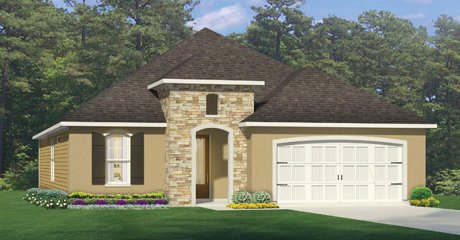
With so many resources available, a REALTOR® may be able to help you come out with the same amount of dollars or more than you could command by selling your home yourself. A recent survey of homebuyers and sellers by the National Association of REALTORS® found that the home price for sellers that use a REALTOR® is 16 percent higher than those who don’t.

A REALTOR® is a professional who knows all that needs to be done. They have the experience and resources to advertise, find the homes that suit your needs, and make all of the preparations that save you the time and effort of researching it yourself.

When you are selling your home, an agent who knows the local market can help you set a fair market price. You want to get the most for your home, but overpricing it can prolong the time it sits on the market, making it even more difficult to sell.

A REALTOR® can help you show your home to potential buyers to its best advantage. They will advise prospects of all aspects and conditions of your home and can protect you from later objections.

A REALTOR® can also help you with the home-buying process. Buying a home can be financially intimidating, but an agent can help you determine how much home you can afford and show you some financing methods. The goal of home ownership remains one of the most commonly shared ones, and an agent can show you how to make it achievable.

A REALTOR® is familiar with all the local and current real estate values, taxes, costs and services that could affect your purchase. Your REALTOR® can show you the home best suited to your needs, and can also suggest simple changes that could make a home a good choice. It helps to have someone both objective and knowledgeable when looking for a home to buy!

When buying or selling a home, there are a lot of details that can overwhelm you or be forgotten. Using a REALTOR® is the best way to be sure that you have someone on your side to get you the best deal and see that everyone is satisfied.

How Does Agency Work In SC

As a buyer or a seller, its important to know your options when purchasing property in South Carolina.  Ace Realty is pleased to offer Client Level Service and provide full representation, which is explained below.  Please take a moment to read through the Agency Explanation (details provided by the South Carolina Agency Brochure).  If you would like a copy of the brochure please contact us.

Agency Relationships
The SC Real Estate License Law, in Section 40-57-139 (A) (1) and (2), requires a real estate licensee to provide you this brochure and a meaningful explanation of agency relationships offered by the licensee’s Company. This must be done at the first practical opportunity when you and the licensee have substantive contact.In South Carolina, before you begin to work with a real estate licensee, it is important for you to know the difference between a broker-in-charge and associated licensees. The broker-in-charge is the person in charge of a real estate Company.Associated licensees may work only through a broker-in-charge.  In other  words, when you choose to work with any real estate licensee, your business relationship is legally with the Company and not with the associated licensee. A real estate Company and its associated licensees can provide buyers and sellers valuable real estate services, whether in the form of basic customer services, or through client-level agency representation. The services you can expect will depend upon the legal relationship you establish with the Company. It is important for you to discuss the following information with the real estate licensee and agree on whether in your business relationship you will be a customer or a client.
Now You Are a Customer of the Company South Carolina license law defines customers as buyers or sellers who choose NOT to establish an agency relationship. The law requires real estate licensees to perform the following basic duties when dealing with any real estate buyer or seller as customers:
• Present all offers in a timely manner
• Account for money or other property received on your behalf
• Provide an explanation of the scope of services to be provided
• Be fair and honest and provide accurate information
• Disclose “adverse material facts” about the property or the transaction which are within the licensee’s  knowledge.
Unless or until you enter into a written agreement with the Company for agency representation, you are considered a “Customer” of the Company, and the Company will not act as your agent. As a Customer, you should not expect the Company or its licensees to promote your best interest, or to keep your bargaining information confidential.  Customer service does not require a written agreement; therefore, you are not committed to the Company in any way.

You Can Become a Client
Clients receive more services than customers. If client status is offered by the Real Estate Company, you can become a client by entering into a written agency agreement requiring the Company and its associated licensees to act as an agent on your behalf and promote your best interests.  If you choose to become a client, you will be asked to confirm in your written representation agreement that you received this brochure in a timely manner.
A seller becomes a client of a Real Estate company by signing a formal listing agreement with the Company. For a seller to become a client, this agreement must be in writing and must clearly establish the terms of the agreement and the obligations of both the seller and the Company which becomes the agent for the seller.
A buyer becomes a client of a real estate Company by signing a formal buyer agency agreement with the Company. For a buyer to become a client, this agreement must be in writing and must clearly establish the terms of the agreement and the obligations of both the buyer and the Company which becomes the agent for the buyer.
If you enter into a written agency agreement, as a Client, you can expect the Real Estate Company to provide the following client-level services:
• Obedience
• Loyalty
• Disclosure
• Confidentiality
• Accounting
• Reasonable care and skill

Client-level services also include advice, counsel and assistance in negotiations.

Single Agency
When the Company represents only one client in the same transaction (the seller or the buyer), it is called single agency.

Dual Agency
Dual Agency exists when the real estate Company has two clients in one transaction – a seller client and a buyer client. At the time you sign an agency agreement, you may be asked to acknowledge whether you would consider giving written consent allowing the Company to represent both you and the other client in a disclosed dual agency relationship.

Disclosed Dual Agency
In a disclosed dual agency, the Company’s representation duties are limited because a buyer and seller have recognized conflicts of interest.  Both clients’ interests are represented by the Company. As a disclosed dual agent, the Company and its associated licensees cannot advocate on behalf of one client over the other, and cannot disclose confidential client information concerning the price negotiations, terms, or factors motivating the buyer/client to buy or the seller/client to sell. Each Dual Agency Agreement contains the names of both the seller client(s) and the buyer client(s) and identifies the property.

It’s Your Choice
Does this Company represent both buyers and sellers as clients?  If so, what are the choices if two clients become involved in one transaction?

What duties will the Company continue to provide me after the transaction is completed?
If you plan to become a client of a Company, the  licensee will explain the agreement to you fully and will answer questions you may have about the agreement. Remember, however, that until you enter into a representation agreement with the Company, you are considered a customer and the Company cannot be your advocate, cannot advise you on price or terms, and cannot keep your confidences.

As a Real Estate consumer in South Carolina, it is your choice as to the type and nature of services you receive.
Designated Agency

In designated agency, a broker-in-charge may designate individual associated licensees to act solely on behalf of each client. Designated agents are not limited by the Company’s agency relationship with the other client, but instead have a duty to promote the best interest of their clients, including negotiating a price. The broker-in charge remains a disclosed dual agent for both clients, and ensures the assigned agents fulfill their duties to their respective clients. At the time you sign an agency agreement, you may be asked to acknowledge whether you would consider giving written consent allowing the Company to designate a representative for you and one for the other client in a designated agency.

Each Designated Agency Agreement contains the names of both the seller client(s) and the buyer client(s) and identifies the property.

What to Look For in Any Agreement
When you choose client-level service, your written Agency Agreement or your agent should answer these questions:
• Can I work with other Companies during the time of the Agreement?
• What will happen if I buy or sell on my own without the agent?
• When will this agreement expire?
• How will the Company be paid for its services?
• You can choose to remain a customer and represent yourself while the Company represents the other party.
• You can choose to hire the Company for representation through a written agreement.
• If represented by the Company, you can decide whether to go forward under the shared services of dual agency or designated agency or to remain in single agency.

The choice of services belongs to you—the South Carolina real estate consumer. If you would like to become a client of ours, please contact us.  it would be our pleasure to have you as a client and provide you with the full representation you deserve.

Dec. 9, 2016

DR Horton Communities – Myrtle Beach

Looking for New Construction?  There are a number of DR Horton Communities throughout Myrtle Beach and the Grand Strand area.DR Horton Homes For Sale  Some of these areas include North Myrtle Beach, Longs, Little River, Murrells Inlet, Conway.
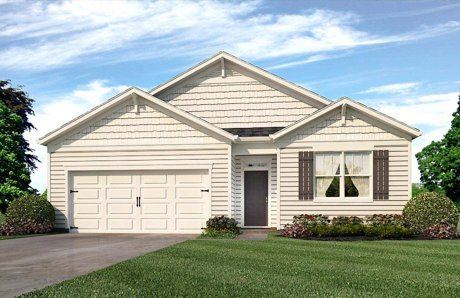
DR Horton is the nations largest home builder and has a few different styles to fit any budget.  These series include their Express Homes, Emerald Homes & Regent Homes.

Residential Homes & Townhouses:

Tuscany (Myrtle Beach, SC) – General Price Range: $250,000 – $320,000 (Emerald)
Carillon Homes For Sale    |    Carrara Homes For Sale    |   View Townhouses For Sale In Tuscany

Arrowhead (Myrtle Beach, SC) – General Price Range: $385,000 – $450,000
View Homes For Sale In Arrowhead

Seabrook Plantation (North Myrtle Beach, SC) – General Price Range: $399,000 – $550,000
View Homes For Sale In Seabrook Plantation

DR Horton Homes Myrtle BeachTuscan Sands (North Myrtle Beach, SC) &; General Price Range: $380,000 – $450,000

View Homes For Sale In Tuscan Sands

Bella Sera (North Myrtle Beach, SC) – General Price Range $258,000 – $325,000

Bella Sera Homes For Sale

Carolina Crossing (Little River, SC) – General Price Range $180,000 – $260,000
Carolina Crossing Homes For Sale

Bradford Meadows (Longs, SC) – General Price Range $170,000 – $250,000
Bradford Meadows Homes For Sale

Dec. 9, 2016

Ace Realty Says Thank You For Visiting!

All of us at Ace Realty would like to say thank you for visiting our Website.  As a company, we are dedicated to providing unparalleled, Client level service.  We use the latest tools and technology to promote and sell properties quickly and support our agents.  We work with buyers, sellers, investors and business owners.

Derek Heppe with Ace RealtyAce Realty’s headquarters are located in North Myrtle Beach, South CarolinaDerek Heppe, is the Founder and President of Ace Realty.  He understands the in’s and out’s of Real Estate, having been in the trench’s as both a REALTOR, Broker & Business owner. In order to provide the highest level of service to clients and agents within the company, he’s achieved many of the National Association of REALTORS designations including the following: Certified Residential Specialist (CRS), Accredited Buyers Representative (ABR), Green Designee (GREEN) & a Short Sale & Foreclosure Resource (SFR). In addition to these NAR designations, he’s also become a Certified Real Estate Negotiator (CREN) and a Certified New Home Specialist (CNHS).

We look forward to making your Real Estate experience a smooth and enjoyable process!

Posted in Ace Realty